How to Measure OOE in Your Warehouse (and Actually Use It to Improve)

Tracking productivity metrics like pick rate or inventory accuracy is useful—but if you want to understand how your entire operation performs, you need something more holistic. That’s where Overall Operations Effectiveness (OOE) comes in.

OOE isn’t just about how much work gets done—it’s about how effectively your people, equipment, and processes come together to create that output. It’s the most comprehensive performance metric your warehouse can track—and with the right tools, it can become a powerful driver of continuous improvement.

In this guide, we’ll walk you through how to calculate OOE, what to include, and how Portable Intelligence helps transform OOE insights into action.


What Is OOE? – Your Warehouse’s True Efficiency Score

Think of OOE as the real-time pulse of your operation. It answers the question: How much of our available time is being used productively across all resources—labour, equipment, and processes?

The OOE Formula:

OOE (%) = (Actual Productive Time ÷ Total Scheduled Time) × 100

While OEE focuses narrowly on machine uptime, OOE goes broader—capturing everything from forklift movement to task handoffs to idle time between jobs. It’s the only metric that ties together flow, speed, and capacity across the warehouse floor.


How to Measure OOE in 4 Practical Steps

Step 1: Define Your “Available Time”

Start by calculating the total scheduled operational time:

  • All active shifts
  • Exclude planned downtime (e.g., maintenance or scheduled breaks)

Example: 3 shifts × 8 hours/day × 5 days = 120 scheduled hours per week

Step 2: Track “Actual Productive Time”

Log every minute spent on value-adding activities:

  • Picking, packing, shipping
  • Receiving and putaway
  • Forklift movement and loading
  • Replenishment and inventory control
  • Slotting and cycle counts

Exclude time spent:

  • Waiting for tasks
  • Traveling unnecessarily
  • Searching for inventory
  • Dealing with rework or errors

Step 3: Automate Data Collection with Smart Tools

Manual tracking won’t capture the detail or accuracy needed. Portable Intelligence’s warehouse visibility suite makes OOE measurement effortless:

  • TED™: Tracks labour tasks in real time with timestamps and mobile prompts
  • RTLS: Logs forklift activity, idle minutes, and movement flow
  • RF Plus™: Captures inventory scans and syncs them with your ERP instantly

All this data is visualized on an integrated dashboard—giving managers live performance insights across shifts, zones, and teams.

Step 4: Calculate and Benchmark OOE

Use the collected data to compute your OOE:

OOE (%) = Productive Time ÷ Available Time × 100

Track and compare:

  • Week-over-week trends
  • Shift-by-shift performance
  • Zone or equipment productivity

85–90% = World-class performance
Below 70% = Significant room for efficiency gains


Using OOE to Actually Improve Your Operation

Knowing your OOE is only useful if you act on it. Here’s how to turn insights into improvement:

Spot Bottlenecks in Labour Flow (with TED™)

  • Identify long delays between tasks
  • Uncover zones with rework or excessive handoff times
  • Reassign or resequence tasks to eliminate idle time

Optimize Forklift Efficiency (with RTLS)

  • Detect underused or overused equipment
  • Identify congestion points and inefficient routes
  • Reroute drivers based on live location data

Improve Slotting and Travel Distance (with RF Plus™)

  • Re-slot fast-moving SKUs closer to shipping
  • Minimize long walks and backtracking
  • Automatically update slotting plans based on item velocity

Drive Daily Action with Dashboards

  • Let supervisors intervene in real time—not after the fact
  • Balance workloads across shifts or teams
  • Build KPIs into daily huddles and performance reviews

From static reporting to real-time decision-making—that’s the power of live OOE visibility.


Common OOE Mistakes to Avoid

  • Only tracking output: Getting work done doesn’t mean it’s getting done efficiently
  • Relying on isolated systems: Without ERP integration, your data is incomplete
  • Trying to fix gaps manually: Sustainable OOE requires automation, not spreadsheets

OOE Is More Than a Metric—It’s a Management Mindset

OOE helps you stop reacting to problems and start designing for flow. It gives you the power to ask:

  • Where are we losing time?
  • Which shifts or zones are falling behind?
  • What’s the impact of idle equipment or delayed tasks?

And more importantly—what are we going to do about it?

With Portable Intelligence, you can measure, manage, and improve OOE through a fully connected ecosystem:
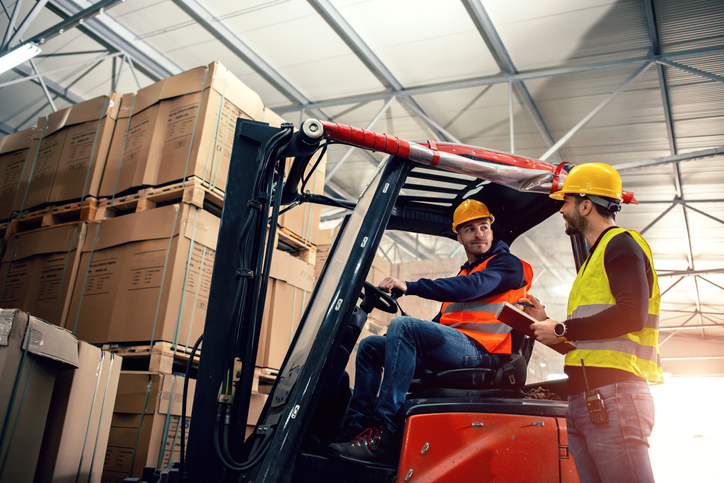
  • TED™ – Task execution and labour performance
  • RF Plus™ – Real-time inventory and smart slotting
  • RTLS – Forklift tracking and flow optimization
  • Dashboards – Unified KPIs for continuous improvement

Kumi Canada - Forklift Tracking Case Study

Workers in warehouse with forklift

Advanced Forklift Tracking

By providing the information, you agree to Portable Intelligence’s Privacy Policy

Share

Tags

Recommended Articles

Stay ahead of the game in warehouse management

Exclusive access to in-depth articles, expert insights, and valuable tips to help you optimize your warehouse operations.

By providing the information, you agree to Portable Intelligence’s Privacy Policy